Solo Travel Safety: Smart Planning + Checklist
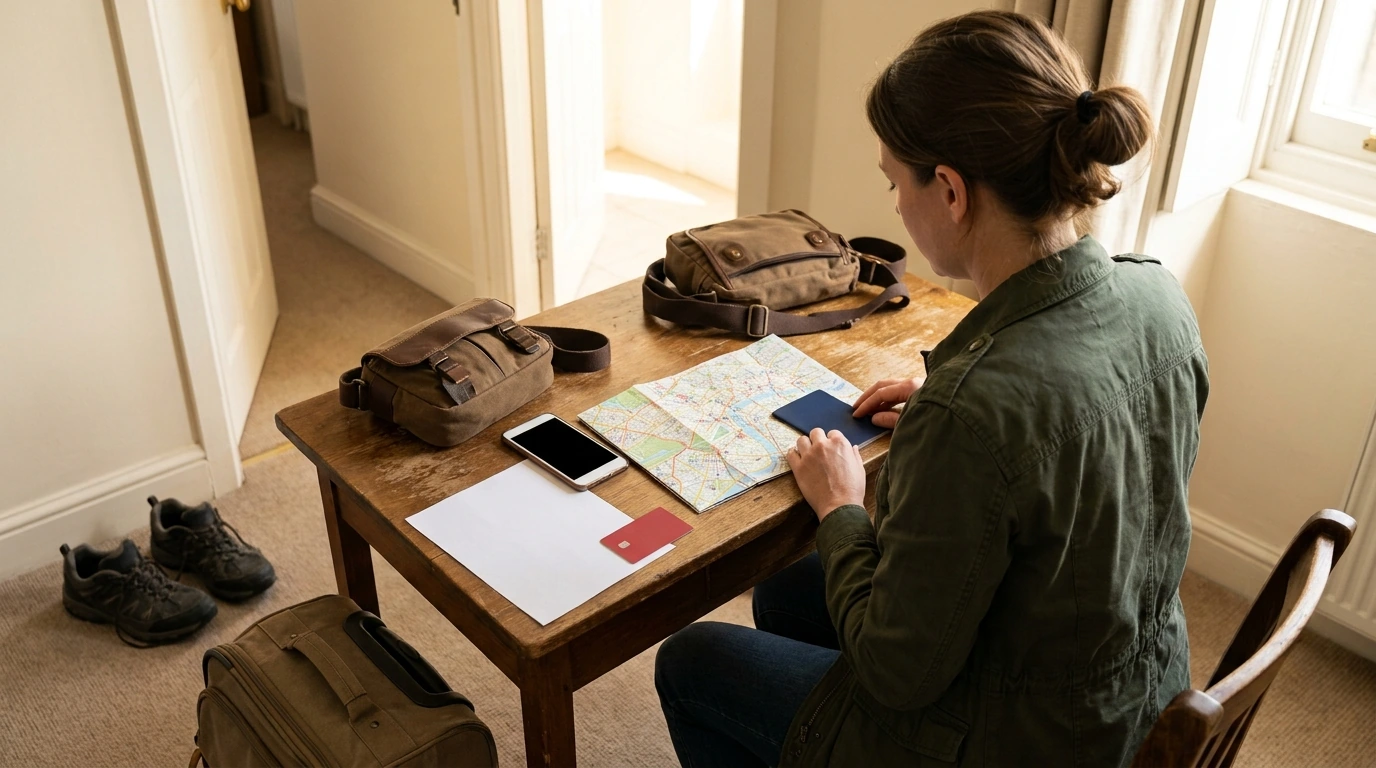
Solo Traveler’s Guide to Staying Safe: Practical Planning, Smart Habits, and a Ready-to-Use Checklist
Solo travel can feel freeing and confidence-building, but it also puts every decision—where to stay, how to move around, what to share online—on one set of shoulders. A safer trip usually comes down to preparation and repeatable routines rather than fear-based rules. The guidance below focuses on travel security planning that works across destinations: risk-aware booking, phone and account protection, situational habits, and a simple response plan for when something goes wrong.
Start with a simple personal safety baseline
Before comparing neighborhoods or reading reviews, set a few “baseline rules” that keep your choices consistent—even when you’re tired, rushed, or excited.
Define non-negotiables
Budget for reputable lodging, avoid arriving after midnight when possible, keep a backup payment method, and keep at least one emergency contact informed. These are small decisions that prevent high-stress moments later.
Use friction on purpose
Add a deliberate pause before accepting invitations, changing plans late at night, or following a stranger’s directions. Quick decisions are a common weak point when traveling alone.
Set boundary scripts
Have short phrases ready so you can decline without overexplaining—especially when asked where you’re staying. Examples: “I already have plans,” “I’m meeting someone,” or “I prefer to keep that private, thanks.”
Choose a “confidence uniform”
Practical shoes, minimal jewelry, and a bag setup that keeps valuables close reduces fumbling and distraction in public. The goal isn’t to look tough—it’s to look unbothered and prepared.
Pre-trip travel security planning that prevents most problems
Research the first 24 hours
Know your airport/rail transfer options, typical taxi or rideshare practices, local scams, and which areas are safest to walk after dark. Many avoidable issues happen before you’ve even checked in.
Book for reliability
Choose accommodations with strong reviews for location and entry security (front desk presence, controlled access, well-lit entrances). Reliability beats bargains when you’re solo.
Plan redundancy
Store key info in two places (offline notes plus a printed copy), keep a backup card/cash, and know how to replace a lost phone or passport. Redundancy turns “trip-ending” problems into inconvenient errands.
Create a communication routine
Send a quick daily check-in to one person and share itinerary highlights without broadcasting exact real-time locations publicly.
Pre-Trip Safety Plan (Quick Template)
| Plan item | What to prepare | Where to keep it |
|---|---|---|
| Emergency contacts | 2–3 names, phone numbers, email, relationship | Phone favorites + printed copy |
| Critical documents | Passport/ID scans, insurance policy, visa details | Encrypted cloud + offline copy |
| Money access | Primary card, backup card, small cash stash | Separate locations on body/bag |
| Arrival plan | How to get from airport/station to lodging, estimated cost, late-night backup | Saved notes + screenshot |
| Local help | Emergency numbers, embassy/consulate, lodging contact | Offline note + wallet card |
Phone, accounts, and digital privacy while traveling solo
Lock down the device
Use a strong passcode, enable biometric lock, set a short auto-lock timer, and turn on “find my device.” Test that location and remote wipe actually work before departure.
Reduce account takeover risk
Enable two-factor authentication and avoid SMS-only recovery where possible. Prioritize updating passwords for email and banking—email control is often the real vulnerability.
Use safer connections
Prefer mobile data or trusted Wi‑Fi. Avoid logging into financial accounts on public hotspots unless you’re using a reputable VPN.
Control location exposure
Delay posting photos until after leaving a place, and review app permissions that share location in the background.
Money and valuables: a carry strategy that scales
Split essentials
Minimize what leaves the room
Use “hands-free” awareness
Know local payment norms
Getting around safely: arrivals, transit, and night movement
Arrive smart
Choose visibility in transit
Rideshare and taxi checks
Night rules that prevent bad tradeoffs
Accommodation safety without overthinking it
Room selection and entry habits
Shared spaces
Fire and exit awareness
Personal safety routines that work in any destination
Situational awareness without paranoia
Alcohol and judgment
Meeting new people safely
Health and wellness is security
If something goes wrong: a calm response plan
Immediate priorities
Lost or stolen phone
Stolen wallet or documents
Document the details
A ready-to-use checklist for solo travel safety
Digital download picks for travelers who want a tighter system
If you prefer having a structured plan you can pull up offline, Solo Traveler’s Guide to Staying Safe (Digital Download PDF eBook) bundles practical planning guidance, real-world solo travel habits, and a ready-to-use checklist format.
For travelers who want to sharpen decision-making and spot persuasion tactics (helpful for scams and upsells on the road), The Psychology of Shopping is a useful companion read.
Trusted travel resources to bookmark
For destination-specific updates and preparation, check U.S. Department of State — International Travel, UK Foreign, Commonwealth & Development Office — Foreign travel advice, and health guidance from the World Health Organization — Travel and health.
FAQ
What are the most important safety steps for a first solo trip?
Plan your first 24 hours (arrival, transfer, check-in), choose reliable lodging, set daily check-ins with a trusted contact, and split money/IDs so one loss doesn’t wipe you out. Also keep a simple response plan for phone or wallet loss.
How can solo travelers protect their phone and accounts while abroad?
Use a strong device lock, enable find-my-device and remote wipe, and turn on 2FA for email and banking. Avoid public Wi‑Fi for sensitive logins, limit location sharing, and if the phone is stolen, lock/wipe it and change email/banking passwords immediately.
Is a safety checklist actually useful, or is it overkill?
A checklist reduces decision fatigue and missed steps during travel stress, especially on arrival days and busy transit days. Using it as a pre-trip setup, an arrival-day review, and a quick daily reset makes safety habits automatic.











Leave a comment