Christmas Tree Symbolism: Lights, Ornaments, Rituals
Why the Christmas Tree Feels So Meaningful
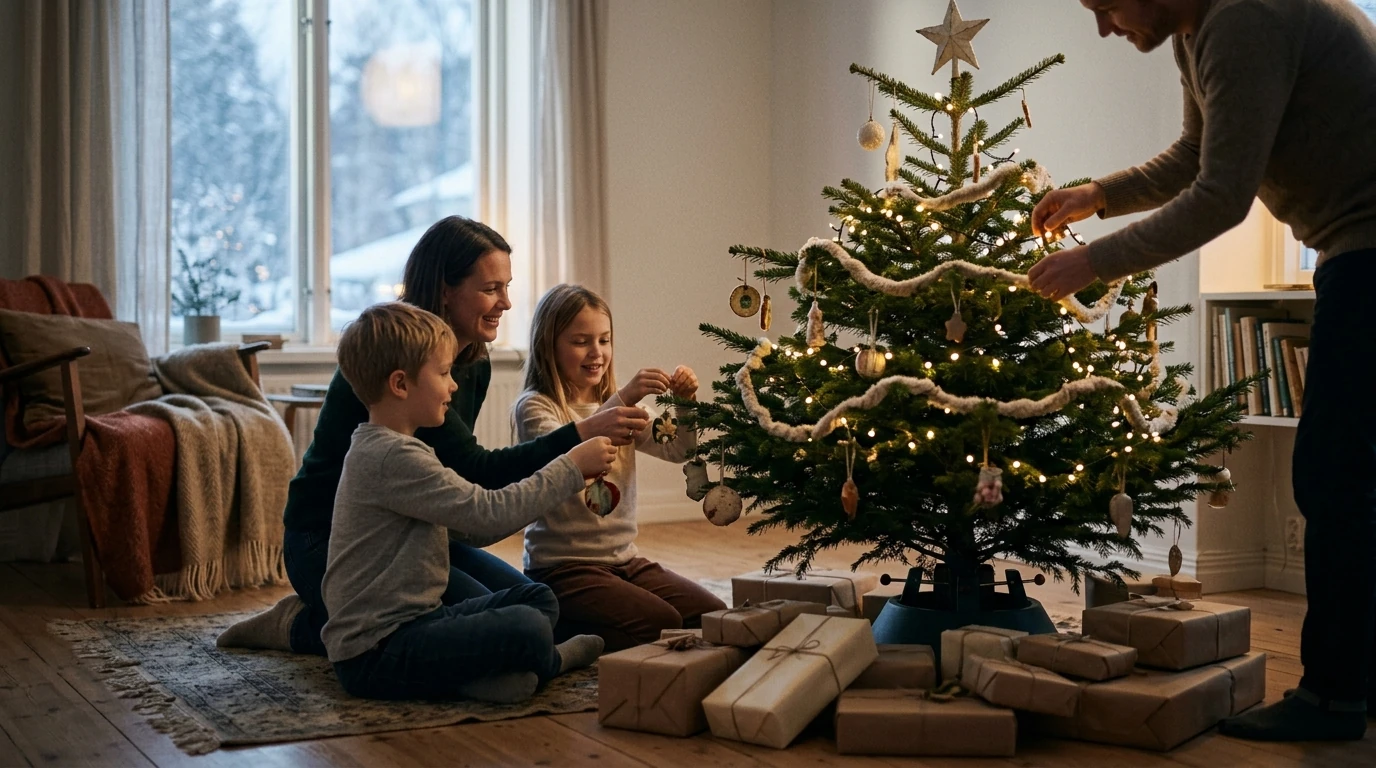
A Christmas tree can look like “just décor,” but it often becomes the most emotionally loaded object in the house all season. Part of that power comes from the evergreen itself: when so much of the outdoors looks dormant, a green tree quietly signals endurance—life continuing through winter.
It also works as a shared focal point. Gifts may come and go, parties come and go, but the tree stays in one spot, inviting people to gather, pause, and remember. For kids especially, repeating the same setup year after year (even with small changes) builds continuity: the familiar ornaments, the same “first photo,” the same corner of the living room. It becomes a steady marker of belonging.
Most importantly, the tree can hold spiritual meaning, cultural meaning, or purely personal meaning—without requiring one belief system. Some households frame the symbols in religious language, others focus on values like hope and generosity, and many blend both in a way that feels honest to their family.
Core Spiritual Symbolism: Evergreen, Shape, and Roots
Across many traditions, tree symbolism tends to circle the same human themes: renewal, unity, and grounding. An evergreen suggests perseverance and the promise of return after hardship. The triangular shape commonly invites reflection on unity and balance—whether that’s mind–body–spirit, past–present–future, or another “three” that matters in your home.
The trunk and roots (or even the tree stand) are easy to overlook, yet they may be the most practical symbols of all: stability and support. When life gets busy, those “invisible” supports—routine, shared meals, family history, and dependable relationships—are what keep everyone upright. Branches reach outward, which can mirror generosity and community: love expanding rather than dividing.
Tree Elements and Common Meanings
| Tree element | Symbolic meaning | Simple family practice |
|---|---|---|
| Evergreen needles | Endurance, life through winter | Name one challenge overcome this year and one hope for the next |
| Trunk | Strength, stability, support | Thank a family member for something steady they provided |
| Roots / tree stand | Grounding, ancestry, foundation | Share a story about grandparents or a cherished family tradition |
| Branches | Connection, giving, community | Pick one small act of kindness to do together this week |
| Top of the tree | Guidance, purpose, higher ideals | Choose a word for the season (peace, gratitude, courage) and place it near the top |
Lights, Stars, and Angels: Guidance and Hope
Adding lights can feel like flipping on a little bit of inner weather. In many spiritual interpretations, lights symbolize illumination: warmth, clarity, and hope during the darkest days of the year. Even in a nonreligious home, the message can be simple—“we make light together.”
Tree toppers carry their own language. A star often points to guidance and direction, the practice of orienting life toward what matters most. An angel is frequently read as protection and comfort, as well as a reminder to extend compassion beyond the household.
A tradition that works in almost any setting is a “first light” moment: before turning on the lights for the season, pause for thirty seconds of quiet, then have each person name one quality they want to bring into the home (patience, courage, playfulness, peace). Turn the lights on right after, as a small, visible commitment.
Ornaments, Garlands, and Color Meanings
Turning Tree-Trimming Into a Family Ritual
A Practical Symbolism Guide for Deeper Holiday Meaning (Digital Download)
For anyone who wants the symbolism gathered in one place—without having to piece it together from scattered sources—The Hidden Meaning Behind the Christmas Tree (digital download eBook) expands these ideas into a structured guide for reflection and family connection. It’s built for real-life households, including mixed-belief families, by focusing on values like renewal, generosity, and belonging alongside spiritual interpretations.
If your family also enjoys understanding where traditions come from, pairing symbolism with history can deepen appreciation—especially for teens or multi-generational gatherings. How Christmas Evolved Through the Ages (digital download) offers a history-forward companion that helps explain how customs traveled, changed, and became “normal” in different places.
What’s Inside the Christmas Tree Symbolism eBook
| Guide section | What it helps with | Best time to use it |
|---|---|---|
| Symbol meanings | Understand the tree beyond décor | Before buying/setting up the tree |
| Tradition-building prompts | Start meaningful conversations | During tree-trimming night |
| Family connection ideas | Create a repeatable annual ritual | Throughout December |
| Reflection exercises | Set intentions and gratitude practices | After the tree is lit / end of day |
Pairing the Tree’s Meaning With Broader Holiday History
Some families find it grounding to connect the “why” with the “where did this come from?” Learning how the Christmas tree spread and evolved can make the tradition feel less automatic and more chosen. For a quick, reliable overview, see Encyclopaedia Britannica’s entry on the Christmas tree and History.com’s overview of Christmas tree history. If you enjoy primary sources and American cultural context, the Library of Congress collections can be a rewarding rabbit hole.
FAQ
What does the Christmas tree symbolize spiritually?
Spiritually, the evergreen often symbolizes renewal and endurance, while the lights and star (or angel) can represent guidance and hope. The tree’s shape is commonly associated with unity, and the yearly tradition can reflect family continuity and belonging. Interpretations vary widely across cultures and belief systems.
How can a family make decorating the tree more meaningful?
Try adding a short gratitude round before you start, then give each ornament a “why” as it goes on the tree. Include one intention word for the season, add a remembrance ornament for someone missed, and end with a brief closing reflection or wish for each person.
Is the Christmas tree only a religious symbol?
No. For many households, the tree is religious; for others it’s cultural, seasonal, or personal. It can also be a values-based symbol centered on hope, generosity, renewal, and togetherness.









Leave a comment