Big Dog Christmas Tree Safety: Setup, Barriers & Training
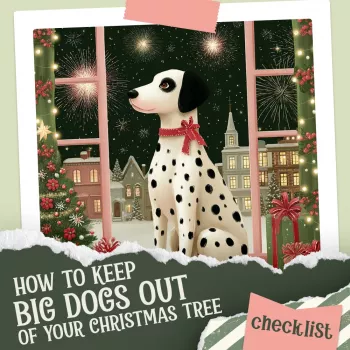
Keep Big Dogs Out of the Christmas Tree: A Calm, Practical Holiday Safety Plan
A decorated tree can be irresistible to large, curious dogs—especially when food scents, dangling ornaments, and twinkling lights invite investigation. With big dogs, the risks go beyond a few pawprints: a shoulder bump can topple a stand, a tail can sweep ornaments to the floor, and chewing can turn cords, hooks, and tinsel into hazards. The goal is simple: make the tree harder to access, less rewarding to investigate, and safer if your dog gets close.
Why big dogs go for the tree (and what that means for prevention)
Most tree “incidents” aren’t about disobedience—they’re about opportunity and novelty. Prevention works best when you combine a physical setup that limits access, training that clarifies expectations, and decorating choices that reduce temptation.
- Novelty + scent: sap smells, new boxes, wrapped gifts, and food-like ornaments can pull dogs in fast.
- Movement triggers: swaying ornaments and dangling light cords can invite pouncing or mouthing.
- Comfort seeking: tree skirts look like cozy bedding, and settling underneath can bump branches.
- Stress and routine changes: guests, noise, and schedule shifts can increase attention-seeking.
- Big-dog reality: even gentle curiosity can cause damage due to size, reach, and momentum.
Set up the room so the tree is harder to access
Start with layout decisions before you decorate. The right placement and a stable base can prevent most “domino effect” problems—tree wobble, ornament falls, and cord exposure.
- Choose placement first: tuck the tree into a corner so only one side is reachable, or position it behind furniture that blocks a running start.
- Create a buffer zone: leave 2–3 feet around the base so tails and hips don’t brush lower branches.
- Use a sturdy stand: match stand size to tree height; stability matters more when a dog can bump the trunk with a shoulder.
- Anchor the tree: tie the upper third of the tree to a wall stud or ceiling hook using strong monofilament or a strap, keeping lines out of chew reach.
- Add traction control: place a non-slip mat under the stand (hidden under the skirt if you use one) to reduce sliding.
- Block access: for determined dogs, a circular exercise pen around the tree often outperforms a single gate.
Decorating choices that reduce temptation and injury risk
Dog-proof decorating isn’t about making your tree plain—it’s about lowering reward and removing the highest-risk items from the “blast zone” (the lower third of the tree and the floor around it).
For a deeper rundown of common seasonal hazards, see guidance from the AVMA and the ASPCA Animal Poison Control.
Training and enrichment that keep noses and paws off the branches
If you want a quick routine everyone can follow (including sitters), consider a ready-made download like How to Keep Big Dogs Out of Your Christmas Tree – Printable Holiday Pet Safety Checklist.
Holiday pet safety checklist (printable-style quick scan)
| Area | Check | Fix if needed |
|---|---|---|
| Tree base | Stand is stable; no wobble when gently nudged | Tighten stand screws; add non-slip mat; switch to heavier stand |
| Anchoring | Tree is tethered to a stud/secure point | Add fishing line/strap anchor; tighten and recheck daily |
| Lower branches | No glass, hooks, or small swallowable ornaments within dog reach | Move fragile items up; swap to shatterproof ornaments |
| Lights & cords | No dangling cords; unplugged when unattended | Use cord covers; reroute behind furniture; set timers |
| Garlands/tinsel | No stringy tinsel or thin ribbon accessible | Remove tinsel; replace with wide fabric garland higher up |
| Tree water | Water is not accessible to the dog | Use a covered reservoir; block base with a pen; skip additives |
| Floor zone | No fallen hooks, ornament caps, or gift wrap scraps | Sweep/vacuum; use a lidded trash can for wrapping debris |
| Barriers | Gate/pen prevents direct access during high-risk times | Add an exercise pen ring or close the room when away |
If your dog keeps testing the rules: fast troubleshooting
For more holiday hazard reminders (including ingestion risks), the AKC also maintains seasonal safety guidance for dog owners.
A ready-to-print plan for busy households
A simple structure prevents repeat problems: a careful setup day, a daily 60-second scan, and a pre-guest scan. A shareable checklist helps keep rules consistent across family members, babysitters, and pet sitters—especially when schedules get hectic. For a non-pet detour during downtime, How Christmas Evolved Through the Ages is an easy read between errands and wrapping sessions.
FAQ
What should be done if a dog drinks Christmas tree water?
Remove access immediately, rinse the bowl/stand area, and monitor for vomiting, diarrhea, drooling, or lethargy. Contact a veterinarian or poison control for guidance, especially if additives, preservatives, or fertilizers were used.
Are pine needles dangerous for dogs?
Pine needles can irritate the mouth and stomach and may cause vomiting; larger ingestions can be more serious. Vacuum regularly, block access to fallen needles, and seek veterinary advice if repeated vomiting, pain, or lethargy occurs.
What’s the best barrier for a large dog around a Christmas tree?
A sturdy exercise pen arranged in a circle often works better than a single baby gate because it prevents direct approaches from multiple angles. Pair the barrier with a well-anchored tree and keep the lower third free of tempting or fragile items.









Leave a comment