Why the C-Shaped Console Table Is the Smartest Mid Century Modern Buy of 2026
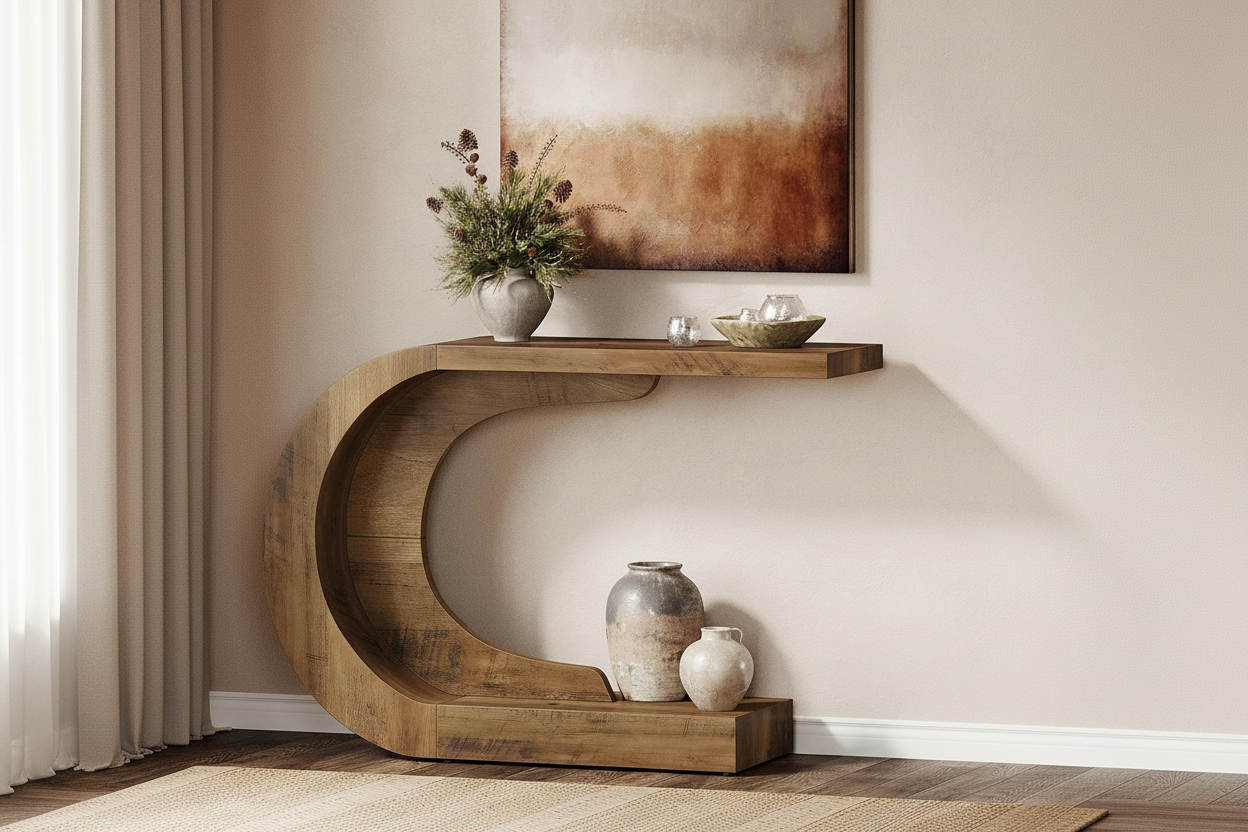
There is a specific kind of frustration that comes with furnishing a hallway or the wall behind your sofa. Standard tables are either too deep, too bulky, or just plain boring. You want something that looks intentional, not like it wandered in from a clearance rack.
The c shaped console table mid century design fixes that. It solves a real problem while looking great doing it. And once you understand why the silhouette works, you will wonder why you ever considered anything else.
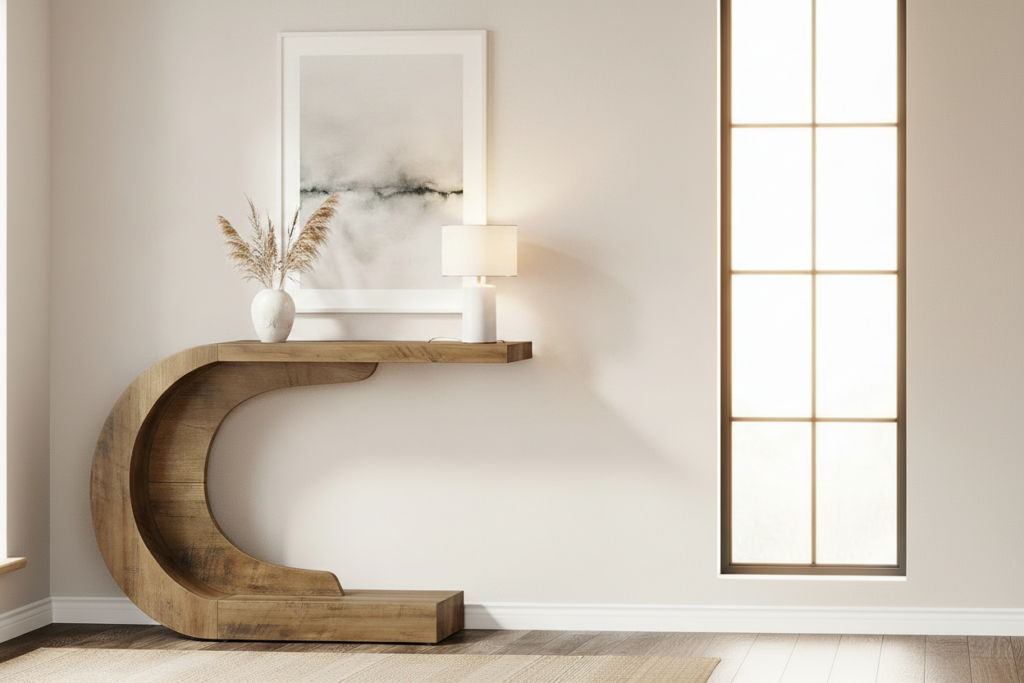
One piece. Fixes three rooms. Here is why this shape keeps selling out.
The C-Shape Is not Just Good-Looking It’s Genuinely Practical
Most console tables are designed to sit against a wall and stay there. The mid century C-shaped version thinks differently.
The legs do not run flat across the bottom like a standard table. One side sweeps forward, one stays back. That C-profile means you can slide it directly behind a sofa without the legs jamming into the frame, something a regular console table simply can not pull off. It also works in narrow hallways where a typical table sticks out too far. The mid century narrow console table c curve sits closer to the wall, takes up less floor space, and still gives you a full surface for a lamp or a tray.
That is two real problems solved by one design decision. That is what good furniture does.
The look helps too. Because the base is open and the legs are tapered, light passes through the piece. Even in a tight entryway, it does not eat the space it completes.
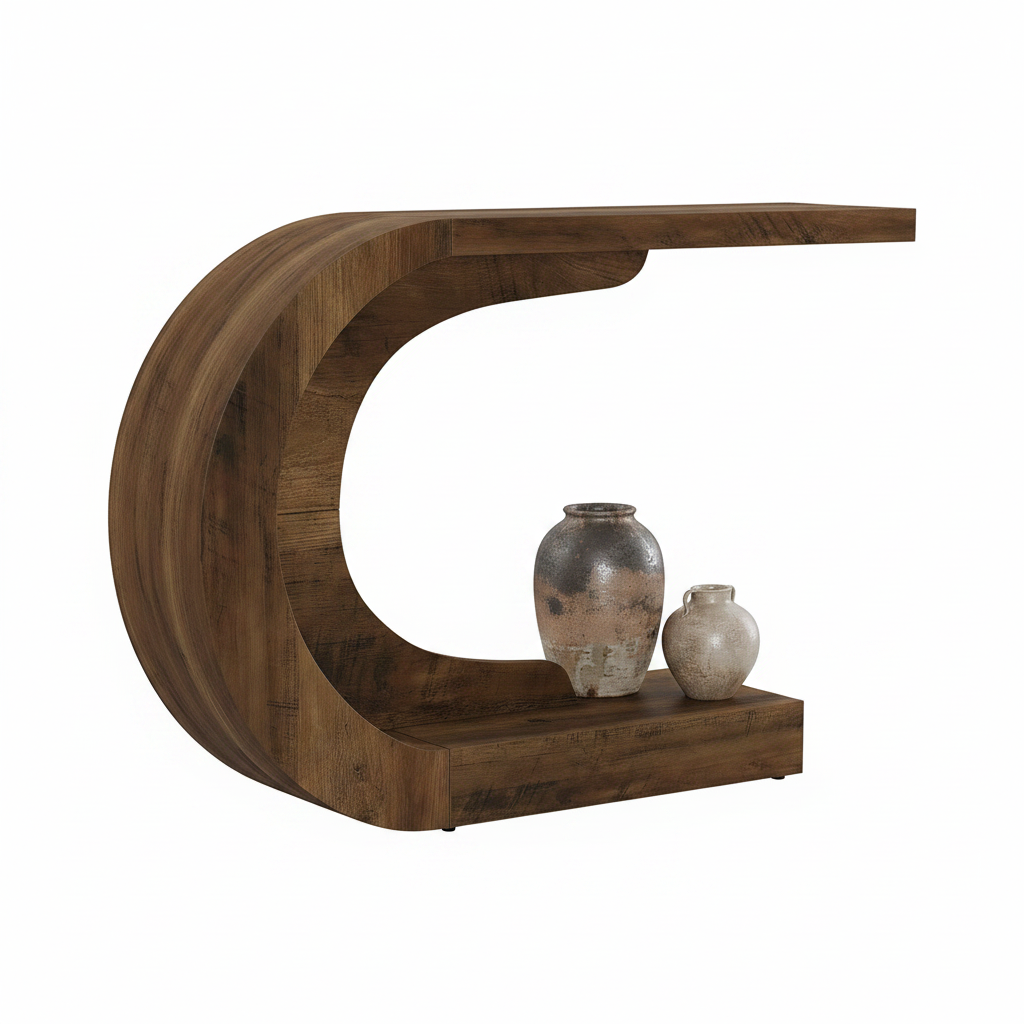
Tapered legs, warm walnut grain, open base the mid century formula that still works in 2026.
What Separates a Good C-Table from a Cheap One
The silhouette is everywhere now. But not every C-table is worth buying. A few details separate the ones that last from the ones that wobble after six months.
Wood finish quality.
Real wood veneer shows grain variation and catches light differently at different angles. Printed film looks flat and starts peeling at the edges within a year. Always check whether the finish is actual veneer before you buy.
Leg construction.
Tapered legs look elegant in photos but need proper joinery to stay solid. Legs that are only glued loosen over time, especially in an entryway where the table gets bumped regularly.
Proportions.
The tabletop should be narrow enough to feel light but wide enough to hold a lamp without looking cramped. A good c shaped accent table tapered legs design balances both.
Assembly.
Pre-drilled holes and labeled hardware matter more than people think. A well-designed table goes together in under 30 minutes without frustration.
The walnut c shaped console table entryway pieces at DSARD check all four warm grain finishes, solid tapered legs, smart proportions, and assembly most people finish before their coffee gets cold.
Three Spots Where This Table Earns Its Place
Behind the sofa is the obvious one. Line the table’s back edge with your sofa’s backrest, leave about an inch of breathing room, and you have a full sofa table moment without any clearance issues. A lamp on one side, a small plant or stack of books on the other — asymmetry reads better than a perfectly centered arrangement.
In the entryway, the mid century c shaped hallway table earns its keep within the first week. A tray for keys, a lamp if there is an outlet nearby, one small object with height. Keep the surface minimal. The shape does the visual work on its own.
At the foot of the bed is underrated. In larger bedrooms, that open stretch of floor at the foot of the bed feels unfinished without something to anchor it. A narrow C-table fits without blocking the room or crowding the space.
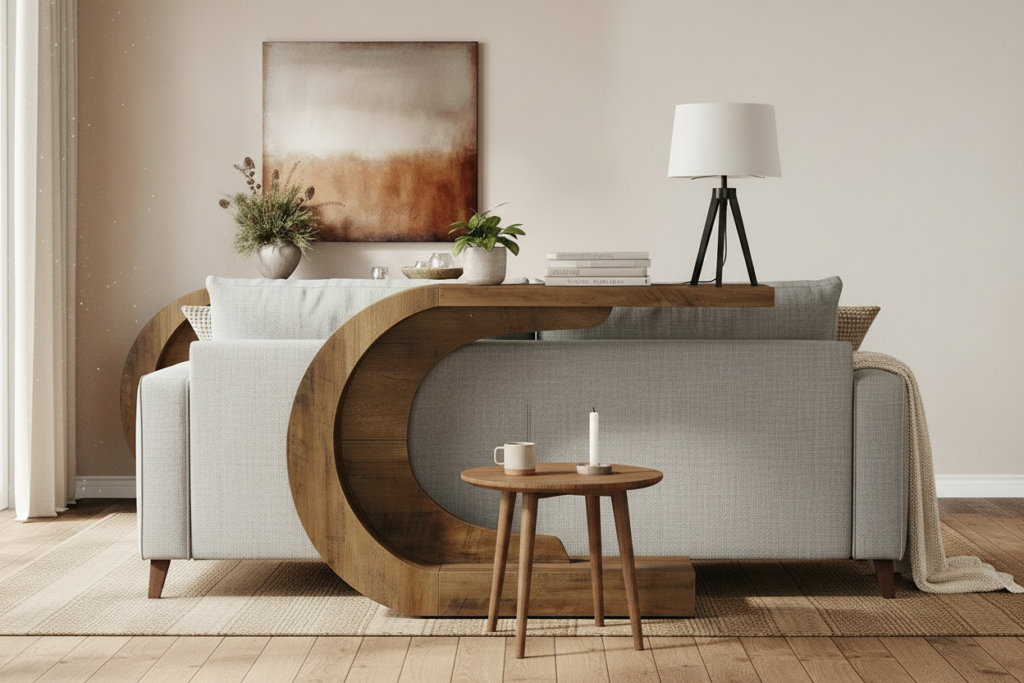
The entry hall that doesn’t have a table yet this is what it looks like after
The DSARD Picks
The full-size version. Works behind standard sofas and in entryways with room to breathe. Real walnut veneer finishes with visible grain, solid tapered legs, and an open lower shelf for a basket or books. The assembly runs about 25–30 minutes.
Built for tighter spaces. Same silhouette and walnut tone, scaled down for hallways under 40 inches wide or apartment entryways where every inch matters. If nothing has fit before, this is the version to try.
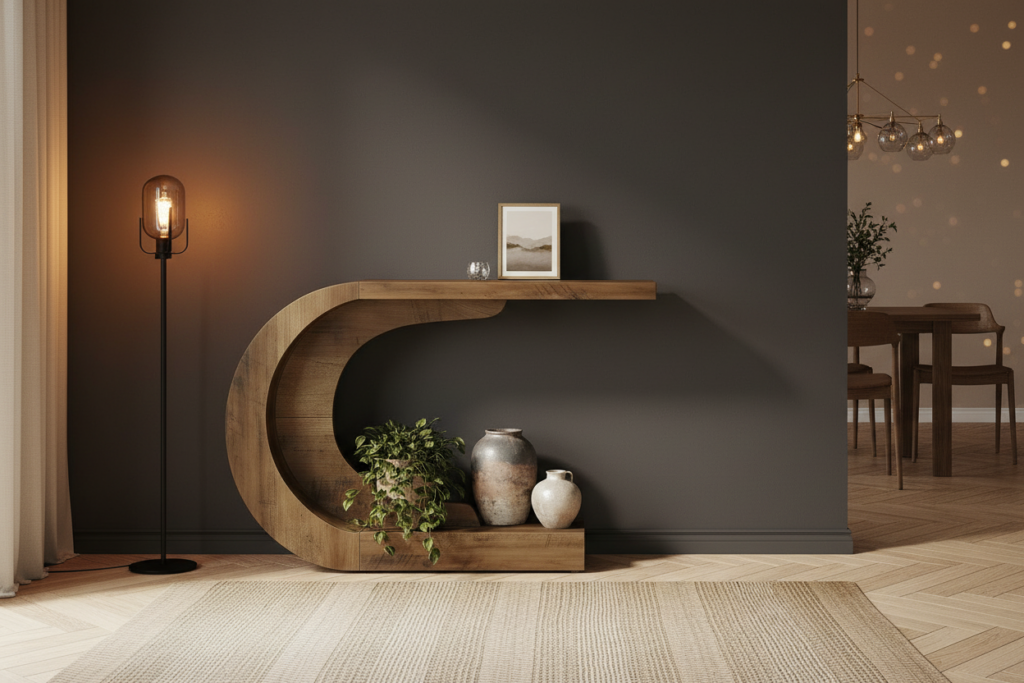
Walnut, tapered legs, the right proportions. Some furniture just gets out of its own way.
A Shape That Actually Solves Something
The reason the c shaped console table mid century silhouette has stayed relevant is not nostalgia. The design logic was right from the start. Tapered legs handle weight well. The C-curve solves placement problems that flat-legged tables do not. Walnut tones work with almost any wall color white, warm gray, sage, dark navy.
If you have been circling this style for a while, the DSARD collection is a solid place to stop circling and just buy the thing.
FAQ
Can a c shaped console table go behind a sofa?
A: Yes, that is its best use. The forward-sweeping leg lets it tuck right behind the couch frame with minimal gap, working exactly like a sofa table but with far more character.
Is walnut finish durable for an entryway?
A: Real wood veneer holds up well. Avoid prolonged direct sunlight and wipe spills quickly. Veneer ages more gracefully than printed film finishes.
How long does assembly take?
A: 20–30 minutes. Hardware included, holes pre-drilled, no extra tools needed.
What is the difference between a console table and a c shaped accent table?
A: Console tables are long and narrow, made for walls. C-shaped tables work both against a wall and tucked beside or behind furniture, more flexible placement, same clean look.








Leave a comment