4-Week Puppy Training Plan: Potty, Crate, Calm Skills

New Puppy Training Starter Guide: A 4-Week Printable Routine for Calm, Confident Puppies
Bringing home a puppy is exciting—and overwhelming. Early routines shape everything from sleep and potty habits to bite inhibition and confidence around people and dogs. A simple four-week plan helps reduce accidents, prevent common behavior problems, and build reliable basics like sit, stay, and come. Below is a practical four-week structure you can follow at home, plus a realistic daily rhythm for house-training, crate training, core cues, and safe socialization.
What to Set Up Before Day One
- Choose a designated potty spot outdoors and commit to taking your puppy to the same place every time.
- Create a safe “home base” with a crate or pen, water, chew items, and a washable bed.
- Pick high-value treats (pea-sized) and keep them handy for fast reinforcement.
- Use baby gates to limit access and reduce accidents while building good habits.
- Plan a vet visit and discuss your vaccination timeline for safer social outings and puppy classes.
For families who want a ready-to-print routine, the New Puppy Training Starter Guide (printable 4-week plan) helps keep everyone consistent with daily checklists and weekly goals.
A Realistic Daily Rhythm for the First Month
A new puppy learns fastest when life is predictable. Aim for a simple loop: potty → play/training → calm chew time → nap, and repeat all day. Most young puppies need potty breaks after waking, after eating/drinking, after play, and roughly every 1–2 hours while awake (age and individual patterns vary).
- Keep training sessions short (1–3 minutes) several times per day to avoid frustration.
- Balance activity with naps; overtired puppies bite more and struggle to settle.
- Track meals, potty times, and accidents for one week to spot patterns quickly.
Sample Day Schedule (Adjust to Age and Household)
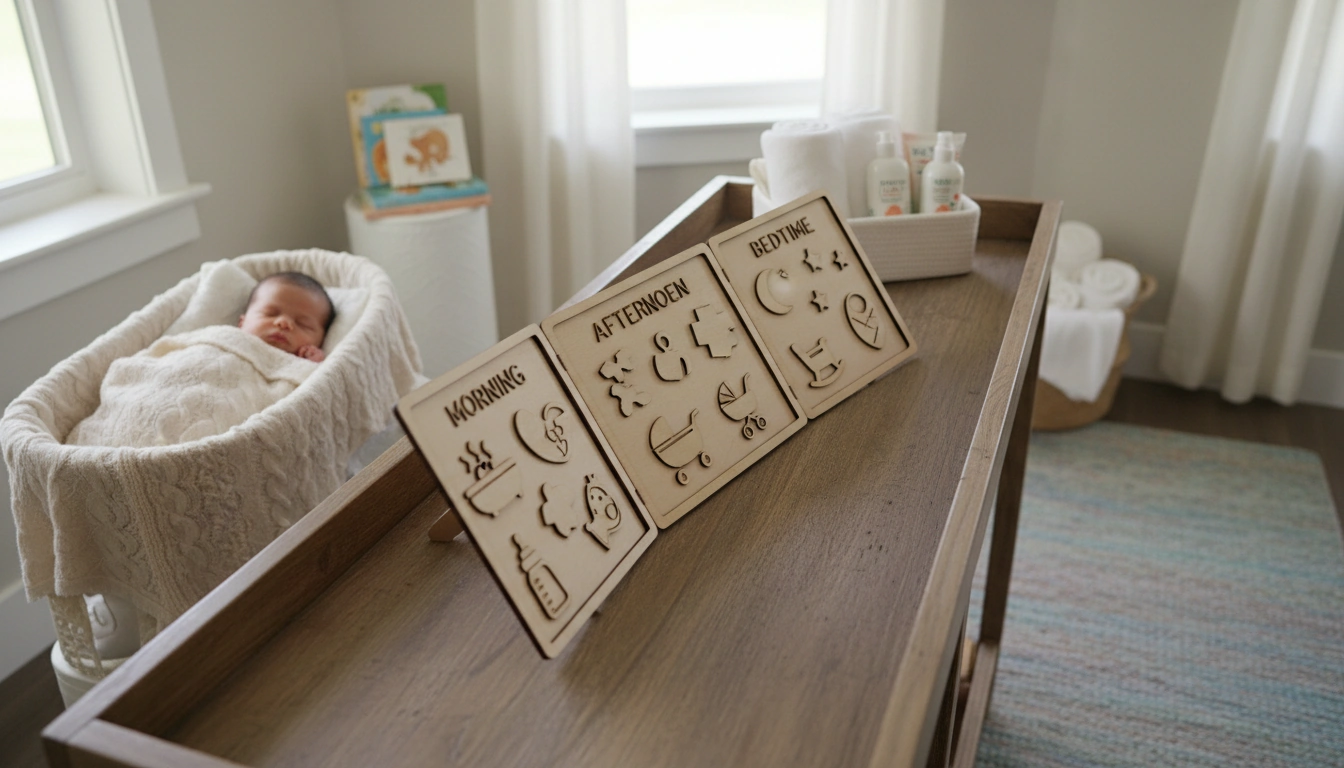
| Time Block | What to Do | Goal |
|---|---|---|
| Wake-up | Potty immediately, then calm praise/treat | Reinforce the potty habit |
| Morning | Breakfast, potty, 2–3 minutes of training, short play | Build routine and focus |
| Mid-morning | Crate/pen nap with a chew | Practice settling and alone-time |
| Midday | Potty, gentle play, handling practice (paws/ears/mouth), potty | Confidence and cooperative care |
| Afternoon | Nap, then a short walk in safe areas or enrichment at home | Controlled exploration |
| Evening | Dinner, potty, training, calm time | Consistency and impulse control |
| Bedtime | Last potty trip, crate/pen sleep | Fewer night wakings over time |
Week 1: Bonding, Boundaries, and Potty Foundations
- Introduce the crate/pen as a calm rest place: feed meals near/inside it and offer special chews only there.
- House-training basics: supervise closely, interrupt accidents calmly, and reward immediately after outdoor potty.
- Start name recognition and attention: say your puppy’s name once, reward eye contact.
- Begin bite inhibition: redirect to a toy; if biting continues, end play for 10–20 seconds (a calm pause).
- Keep social exposure gentle: new surfaces, household sounds, and friendly visitors—paired with treats.
Tip: treat the first week like “management plus rewards.” The more you prevent rehearsal of accidents and nipping, the faster good habits stick.
Week 2: Crate Comfort, Leash Basics, and “Sit” as the Default
- Build crate duration gradually: short calm stays while you’re nearby, then brief absences.
- Introduce a simple leash routine: clip on, treat, walk a few steps, treat for staying close—avoid long walks.
- Teach sit with a lure and reward; use it before meals, doorways, and greetings to reduce jumping.
- Practice gentle grooming/handling daily for 30–60 seconds with treats.
- Add enrichment: snuffle mats, stuffed food toys, and “find it” treat-scatter games to reduce nipping.
If you want to stay consistent as a household, a written routine reduces mixed messages. The printable format in the New Puppy Training Starter Guide makes it easier to follow the same steps day after day.
Week 3: Reliable Potty Signals, “Down,” and Calm Greetings
Socialization should stay positive and low-pressure. For evidence-based guidance, see the American Veterinary Society of Animal Behavior (AVSAB) position statement on puppy socialization.
Week 4: “Come,” Safer Socialization, and Real-World Practice
If you’re looking for additional training milestones and a helpful timeline, the American Kennel Club’s puppy training resources are a solid reference to compare against your puppy’s pace.
Troubleshooting Common Setbacks
Printable Plan Option for Easy Tracking
If you like structured checklists, the New Puppy Training Starter Guide | Printable Puppy Training eBook for Beginners is designed around a four-week routine with practical steps you can repeat and build on.
For readers who enjoy understanding the “why” behind habits and consistency, The Psychology of Shopping can be a helpful companion for thinking about cues, rewards, and routines—useful concepts when you’re trying to stay consistent during the puppy months.
FAQ
How often should a new puppy go out for potty breaks?
Plan on potty breaks after waking, after eating or drinking, after play, and about every 1–2 hours while your puppy is awake. Reward immediately after your puppy finishes outside so the right choice becomes a strong habit.
When is it safe to start socializing a puppy in public?
Follow your veterinarian’s guidance based on your puppy’s vaccination status and local disease risk. In the meantime, choose lower-risk options like meeting healthy vaccinated dogs, attending vaccine-required puppy classes, or carrying your puppy in calm public places for exposure.
What are the first commands to teach a puppy?
Start with name/attention, sit, and come, then add down, drop it/leave it, and very brief stays. Keep sessions short, upbeat, and reward-based so your puppy stays confident and eager to learn.








Leave a comment